LP Conducts Third Unhoused Encampment Outreach Event at Two Bloomington-Normal Sites
- Lumina Project

- Nov 20, 2025
- 4 min read
Updated: Nov 27, 2025
Sunday, November 16th, 2025
This past Sunday, The Lumina Project hosted its third unhoused encampment outreach event in Bloomington-Normal, IL, visiting two locations we had previously worked with. It had been nearly a month since our last outreach, and we were eager to return and continue our mission. The success of this event was made possible thanks to the incredible generosity of local food pantries, as well as a significant portion of donations from the Illinois State University School of Business Food Drive. These contributions allowed us to bring a wide array of nonperishable items and basic necessities, which were crucial in providing immediate support to those in need.


Photos Taken at the Adelaide St. Unhoused Encampment in Normal
The donations for this outreach were nothing short of overwhelming. These items included but were not limited to: 3 cans of coffee grounds, 38 cans of assorted beans, chicken noodle soup, mandarin oranges, cream of chicken soup, green beans, and corn; 18 cans of chicken/tuna, 11 boxes of cereal, 10 cups of apple sauce, 14 bags/boxes of assorted rice, quinoa, and oatmeal; 12 packages of chicken chili soup, 17 packages of ramen noodles, 15 rolls of toilet paper, 170 tampons, 8 jars of peanut butter, 6 boxes of pasta, 2 jars of pasta sauce, 3 boxes of granola bars, 3 bags of instant mashed potatoes, 15lbs of dog food, 1 box of dog treats, 1 bag of chips, and 2 containers of seasoning.
We also received a sizeable donation of clothing items, consisting of: 3 three-piece men's suits, 12 T-shirts, 1 suit jacket, 9 women's long sleeves, 1 men's button-up shirt, 12 pairs of assorted pants, 1 women's sweater, 1 women's sports bra, and 4 pairs of assorted men's pants. These products are not only essential for daily survival, but they also represent the combined effort of many people and organizations coming together to meet an urgent need in our community.



One of the most striking observations during our visit was the noticeable turnover in the camp's population. Many new faces had appeared since our last visit, which highlighted the fluidity of unhoused living and the constant challenge faced by those who are underserved. At the Adelaide site, we first met Danielle and Derrick, a couple who welcomed us warmly. Josh, a man we met soon after, greeted us with open arms and expressed his thanks repeatedly. He went beyond just receiving help, actively assisting us in navigating through the camp and connecting us with others in need. Josh's positive attitude exemplified the sense of community and mutual support that thrives even in the most difficult circumstances. Other individuals, such as Drew, Amy, Dylan, Jake, Annie, and Chris, were equally receptive and open to our visit, sharing their stories and needs.

Perhaps one of the most meaningful aspects of this outreach event was our ability to offer St. Vincent De Paul (SVDP) Food Pantry Proxy Registration Forms to camp members. These forms allow individuals without transportation or the ability to physically visit the pantry to have food and supplies delivered directly to them by LP members. With the help of this system, we were able to gather eight signatures, ensuring that these individuals would receive much-needed supplies in the coming weeks. This partnership with SVDP exemplifies how we can continue to strengthen our community and explore unconventional solutions to address food insecurity in our hometown.


SVDP Food Pantry Proxy Registration Forms
While a majority of camp members were welcoming, we did encounter some initial resistance and hostility from select inhabitants. One man from within his tent expressed his desire to simply be left alone. Another man, who later came around and graciously accepted our donations, threatened us verbally and shouted for us to leave the encampment. These moments are an inevitable part of outreach work, as we understand we are outsiders entering a deeply personal living space. Nevertheless, interactions like these serve as valuable lessons, reminding us to be more intentional in how we approach these communities, ensuring that we announce our presence and intentions with sensitivity and care.


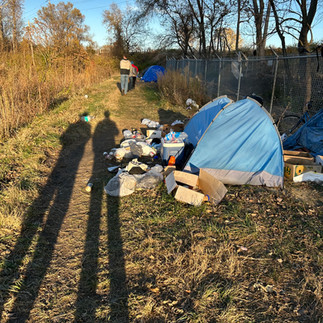
At the second location, known as 'The Gravel Pits', we had the chance to reconnect with Angel, one of the camp members from a previous visit. He was just leaving when we arrived, but we were able to provide him with some much-needed supplies. We then met brothers Michael and Rick, who shared stories of their family members also in desperate need of basic necessities, painting a poignant picture of how homelessness impacts entire families, not just individuals. We also heard a disturbing story of a violent incident in the camp involving a machete, reminding us of the dangers many face in such environments.





Photos Taken at the 'Gravel Pits' Site in Bloomington
At the back of the site, we met and talked extensively with Richard, who actually gave me his phone number, his fiancé, Lawrence ("Law"), Earl, and Johnny. Many of these individuals were eager to give us a detailed tour of their living conditions, expressed some of their personal hardships and healthcare struggles, particularly obtaining affordable insulin, and even allowed us to pray over them in a circle before departing.
Throughout the event, we took note of specific items that were repeatedly requested. Beyond food, basic hygiene supplies, and items for personal warmth were high on the list. Hand warmers, socks, gloves, blankets, and tarps were among the most frequently mentioned needs. These insights will help us better prepare for future outreach efforts, ensuring that we bring the most requested items to the people who need them most. Additionally, we learned about the risks posed by wildlife in the area, such as rodents and coyotes, which threaten both food supplies and the safety of camp residents, particularly pet dogs.

Looking back on this event, we are filled with a sense of accomplishment. Although our outreach team was small - only four people - we were able to make a significant impact. Our ability to adapt, connect with the community, and leverage partnerships shows that even with limited resources, meaningful change is possible.


Comments